
In 2019, two very different companies handed their top jobs to two very different men. Kraft Heinz chose Miguel Patricio, a Portuguese marketing mastermind who had spent two decades turning beer brands into global giants. Pfizer chose Albert Bourla, a Greek veterinarian who had spent 25 years climbing from the company’s animal-health division to its executive suite.
Their names now appear side by side in CEO rankings, compensation studies, and leadership debates — but their paths to the corner office could hardly be more different. Patricio is the classic brand-builder, forged in consumer goods. Bourla is the scientist-turned-CEO who steered the fastest vaccine development in history.
This is the full story of both careers: the milestones, the money, and what separates two of the most closely watched executives in global business.
| Miguel Patricio | Albert Bourla | |
|---|---|---|
| Full Name | Miguel Patricio | Albert Bourla (Άλμπερτ Μπουρλά) |
| Known For | Former CEO of Kraft Heinz (2019–2023) | Chairman & CEO of Pfizer |
| Birth Year | 1966 or 1967 | 1961 |
| Age | 59–60 | 64 |
| Birthplace | Portugal | Thessaloniki, Greece |
| Nationality | Portuguese | Greek-American |
| Education | Business Administration, FGV EAESP, São Paulo (1989) | DVM & PhD in Biotechnology of Reproduction, Aristotle University of Thessaloniki |
| Profession | Consumer-goods executive, corporate director | Veterinarian, pharmaceutical executive |
| Spouse | Jill Patricio | Myriam Alchanati Bourla |
| Children | 3 | 2 |
| Current Status | Board member, Kraft Heinz & AB InBev | Chairman & CEO, Pfizer |
The Marketer Who Became a CEO: Who Is Miguel Patricio?
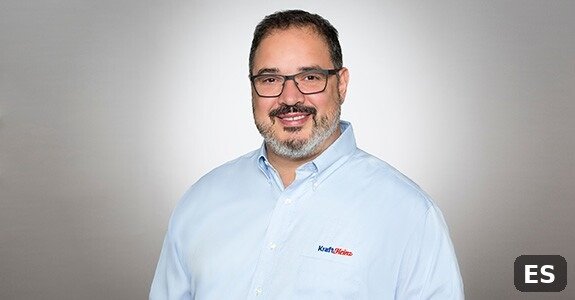
Miguel Patricio is a Portuguese businessman best known as the former chief executive of Kraft Heinz, one of the world’s largest food companies. He ran the company from July 2019 through December 2023, a period in which he was hired to do something the food industry rarely sees: hand the keys to a pure marketer.
That appointment made headlines in April 2019. Kraft Heinz was bruised — it had just written down the value of its Kraft and Oscar Mayer brands by more than $15 billion, cut its dividend, and disclosed an SEC subpoena. The board, backed by Warren Buffett’s Berkshire Hathaway and Brazilian private equity firm 3G Capital, wanted “fresh eyes.” Patricio’s answer in his first interviews: “I bring fresh eyes to the business. It’s a big opportunity.”
What made him unusual was not just that he came from outside food, but that he came from marketing — a discipline corporate boards historically treated as a support function, not a CEO pipeline. As one executive recruiter told Boyden at the time: “Increasingly, marketing folks are getting the nod to CEO. That used to be the exception, not the rule.”
Early Life and Education
Miguel Patricio was born in Portugal in 1966 or 1967. Rather than studying at home, he crossed the Atlantic for his education, earning a degree in Business Administration from FGV EAESP in São Paulo, Brazil, in 1989.
The choice proved formative. Brazil was the launchpad for a career that would eventually loop through Latin America, New Jersey, Georgia, China, and New York — a genuinely global résumé built one consumer market at a time.
The AB InBev Years: Building a Brand Empire
Before Kraft Heinz, Patricio spent two decades at Anheuser-Busch InBev — the brewer behind Budweiser, Corona, and Stella Artois — and it was there that he built his reputation as one of the most effective marketers on the planet.
He joined Ambev in 1998 and was its Chief Marketing Officer by 1999. But the defining stretch came when he stepped out of marketing into running real businesses. As Zone President for North America (2006–2008) and then Zone President for Asia Pacific (2008–2012), he proved he could do more than advertise — he could operate.
Asia Pacific was his showcase. He set the foundation for the China business with a premium-market strategy that made Budweiser the leading brand in the country, while expanding local names like Harbin. Regional revenues grew from $1 billion in 2008 to $2.7 billion in 2012, making AB InBev the number one beer company in China.
He returned to marketing as AB InBev’s Global CMO from 2012 to 2018, where he wrote the strategic playbook for Corona, Budweiser, and Stella Artois — a playbook that accelerated organic sales growth to high single digits, accounting for more than one-third of AB InBev’s total organic growth and over 20 percent of its 2018 year-end global revenues. In his final year, AB InBev was named the most awarded brand owner at Cannes Lions 2018, the global benchmark for creative marketing. His campaigns included rebranding Budweiser as “America” and rolling out limited-edition NFL cans for Bud Light.
Before brewing, his résumé already read like a tour of consumer-goods royalty: Philip Morris, The Coca-Cola Company, and Johnson & Johnson across Latin America, New Jersey, and Georgia.
The Kraft Heinz Turnaround
Patricio took the Kraft Heinz job in July 2019 with the company’s pantry of iconic brands — Heinz ketchup, Kraft macaroni and cheese, Oscar Mayer — losing ground to cheaper private-label rivals. His strategy broke sharply from the 3G Capital cost-cutting playbook that had defined his predecessor Bernardo Hees.
Instead of more cuts, he put money behind the brands. In 2020, Kraft Heinz unveiled a broad strategic transformation: more than 55 product categories reorganized into six consumer-focused platforms, a significant increase in marketing investment, portfolio reshaping, efficiency programs, digital investment, and debt reduction. The company later credited Patricio’s consumer and marketing experience as central to the turnaround.
The succession was planned, not forced. In August 2023, Kraft Heinz announced Carlos Abrams-Rivera — already a senior leader inside the company — would take over as CEO in January 2024. Patricio shifted to Non-Executive Chair, then became Executive Chair in September 2025 as the company worked on a proposed separation into two public companies. His term as Chair ended in December 2025, with John T. Cahill becoming independent Chair and Steve Cahillane CEO on January 1, 2026. Patricio remains a Kraft Heinz board member — and still sits on AB InBev’s board as a representative of its main shareholders.
Miguel Patricio’s Net Worth and Compensation
No major publication has published a standalone net worth estimate for Miguel Patricio, so any figure you see online should be treated with skepticism. What is verifiable is his compensation and equity position.
In 2023, his final full year as CEO, Patricio earned $5.09 million in total compensation — including a $1.10 million salary and a $3.37 million bonus — according to executive-compensation filings. He also holds Kraft Heinz stock valued at roughly $17.6 million. Notably, filings also show he has donated stock worth more than $58 million to charitable causes over the years, a figure that speaks to wealth accumulated well beyond his disclosed salary.
The Veterinarian Who Ran the Vaccine Race: Who Is Albert Bourla?
Albert Bourla’s path to a Fortune 500 CEO job is one of the most improbable in corporate America. He started as a veterinarian in Greece, joined Pfizer’s Animal Health division in 1993 — and never worked for another company. Over 25-plus years and at least ten different roles, he climbed from treating animals to leading the company through the most consequential vaccine rollout in modern history.
Bourla was born on October 21, 1961, in Thessaloniki, Greece, to Sephardic Jewish parents who were Holocaust survivors. His mother was reportedly seconds from execution by firing squad when she was spared after a ransom was paid to a Nazi official; his father was outside the Jewish ghetto when its inhabitants were taken to Auschwitz, went into hiding, and never saw his parents again. Bourla later directed his $1 million Genesis Prize award entirely toward Holocaust education.
He earned his Doctor of Veterinary Medicine and a PhD in the Biotechnology of Reproduction from Aristotle University of Thessaloniki, left Greece at age 34, and has since lived in seven cities across four countries.
The Long Climb Inside Pfizer
Bourla’s career is a case study in single-company loyalty. Starting in Pfizer’s Animal Health division in Greece in 1993, he combined scientific knowledge with growing commercial responsibility, moving through international management into the company’s human-health businesses.
The milestones came steadily. He served as President and General Manager of the Established Products Business Unit from 2010 to 2013, building a market for medicines whose patents had recently expired. He then became Group President of Vaccines, Oncology and Consumer Healthcare, and in February 2016 took over as Group President of Pfizer Innovative Health — where sales rose 11 percent in 2016 alone.
Pfizer appointed him Chief Operating Officer effective January 2018, and later that year announced he would succeed Ian Read as CEO. He took the top job in January 2019, adding the Chairman title later — the same year Miguel Patricio took over Kraft Heinz.
Leading Pfizer Through COVID-19
Everything changed in 2020. Under Bourla, Pfizer partnered with Germany’s BioNTech to develop an mRNA vaccine and compressed a process that typically takes years into roughly eight months — the first COVID-19 vaccine authorized in Western countries. The company coordinated research, clinical trials, manufacturing, regulatory work, and global distribution on a schedule nobody thought possible.
The achievement pushed Pfizer’s revenue past $100 billion in 2022, more than double pre-pandemic levels, and turned Bourla into a global figure: Time named him among its Heroes of the Year in 2021, CNN Business named him CEO of the Year, and Institutional Investor had already ranked him America’s best pharmaceutical CEO in 2020.
He was also reshaping the company before the pandemic ever hit. Early in his tenure, Pfizer shed non-core businesses — separating Upjohn into a combination with Mylan and placing its consumer-health business into a joint venture with GSK — while launching a “Purpose Blueprint” built around Courage, Excellence, Equity, and Joy. After the pandemic, he doubled down with the $43 billion acquisition of Seagen in 2023 (a major oncology bet) and the 2025 acquisition of Metsera to strengthen Pfizer’s position in obesity treatments. The company reported about $62.6 billion in 2025 revenue with $10.4 billion invested in internal R&D.
In 2022, Bourla also published Moonshot: Inside Pfizer’s Nine-Month Race to Make the Impossible Possible, his account of the vaccine sprint.
Albert Bourla’s Net Worth and Compensation
Bourla’s wealth comes almost entirely from a three-decade Pfizer career. His total compensation has tracked the company’s fortunes: roughly $21 million in 2020, $17.9 million in 2021, a 36 percent jump to about $33 million in 2022 — the year of the $100 billion revenue peak — and $24.6 million in 2024.
The base salary is only about $1.69 million; the real money is performance bonuses, long-term incentives, and stock. Filings show he owns more than 222,000 Pfizer shares worth over $18.5 million, and has sold over $5.5 million in stock over nine years. Published net worth estimates vary — roughly $35 to $43 million across the more careful outlets — reflecting differences in how executive equity is valued.
Patricio vs. Bourla: Two Routes to the Top
The contrast is what makes the pairing interesting. Patricio is a marketer who crossed companies, categories, and continents — beer, food, tobacco, soft drinks — learning to sell anything to anyone. Bourla is a scientist who stayed inside one company for his entire career, going deep rather than wide.
Patricio’s signature achievement was reviving household brands with marketing firepower; Bourla’s was delivering a scientific moonshot under global scrutiny. One bet his career on creativity, the other on clinical trials. Both became CEOs in January–July 2019, and both proved that there is no single formula for reaching the top of corporate America.
Patricio now operates as a corporate director across two boards; Bourla continues to run one of the world’s most scrutinized pharmaceutical companies. Different industries, different eras of leadership — and a shared lesson: sustained, verifiable results still beat hype.
The Bottom Line
Miguel Patricio and Albert Bourla remind us that the CEO title can be earned from opposite ends of the business world. One built his name making people reach for a bottle; the other built his making medicine reach people faster than anyone thought possible. Their careers are complete, documented, and instructive — marketing mastery on one side, scientific leadership on the other — and the numbers behind both tell the same story: long careers, compounded expertise, and compensation that followed real performance.
FAQs
Are Miguel Patricio and Albert Bourla related?
No. There is no reliable public evidence that they are related. Patricio is Portuguese and Bourla was born in Greece to Sephardic Jewish parents; their families and career histories are entirely separate.
Have Miguel Patricio and Albert Bourla ever worked together?
No. Public corporate records show no shared employer, joint venture, or direct professional relationship between them. They appear together only in executive rankings and leadership discussions because both became CEOs of major U.S.-listed companies in 2019.
What is Miguel Patricio’s net worth?
No major publication has published a verified net worth figure for Patricio. Filings show he earned $5.09 million in total compensation in 2023 and holds Kraft Heinz stock worth roughly $17.6 million. Treat any single “net worth” number found online as unverified.
What is Albert Bourla’s net worth?
Estimates vary by outlet, but the more careful ones place Bourla’s net worth in the roughly $35–43 million range, based on his Pfizer stock holdings of more than 222,000 shares plus decades of executive compensation.
How much does Albert Bourla earn as Pfizer CEO?
His total compensation was $24.6 million in 2024, following $33 million in 2022 — the year Pfizer revenue topped $100 billion. His base salary is about $1.69 million, with most pay coming from bonuses and stock awards.
Why did Miguel Patricio leave Kraft Heinz?
It was a planned succession. Kraft Heinz announced in August 2023 that Carlos Abrams-Rivera would become CEO in January 2024. Patricio moved to board leadership — Non-Executive Chair, then Executive Chair — before his chair term ended in December 2025.
For more business leader profiles and career stories, explore Essence Magazine.
