
Why Search for a Rewarding Synonym?
Every writer knows that the right word can turn a bland sentence into a vivid experience. When you look for a rewarding synonym, you’re seeking alternatives that capture the same sense of satisfaction and value. This quest enriches your prose, making it more engaging for readers and more effective for SEO. Understanding the nuances behind each option helps you communicate with precision.
In today’s content‑driven world, search engines reward fresh vocabulary that aligns with user intent. Using varied language signals expertise and keeps your audience interested. A well‑chosen rewarding synonym can also differentiate your brand voice from competitors. It’s not just about swapping words; it’s about enhancing meaning.
Whether you’re drafting a blog post, a business report, or a creative story, the ability to replace “rewarding” with a fitting alternative expands your expressive toolkit. Below, we explore the most popular rewarding synonyms, their subtle differences, and practical ways to apply them.
Top Rewarding Synonyms and Their Nuances
Fulfilling
The term “fulfilling” conveys a deep sense of personal or professional completion. It suggests that an activity meets inner goals and expectations, often tied to purpose or mission. Use it when you want to highlight long‑term satisfaction rather than immediate pleasure.
For example, “The volunteer program was fulfilling for all participants.” This sentence emphasizes lasting impact and personal growth. In SEO terms, “fulfilling” is a high‑search‑volume synonym that can attract readers seeking meaningful experiences.
Gratifying
“Gratifying” leans toward immediate pleasure and positive feedback. It captures moments when effort is recognized or results bring joy. This word is ideal for describing short‑term successes or compliments.
Consider the sentence, “Receiving the award was truly gratifying.” Here, the focus is on the emotional uplift following an achievement. Including “gratifying” as a rewarding synonym adds a layer of emotional resonance.
Satisfying
When you need a neutral, widely understood alternative, “satisfying” fits perfectly. It denotes contentment without the intensity of “fulfilling” or “gratifying.” This makes it versatile across formal and informal contexts.
Example: “The project’s results were satisfying for the entire team.” The word underscores a balanced sense of achievement, suitable for business reports and casual blogs alike.
Enriching
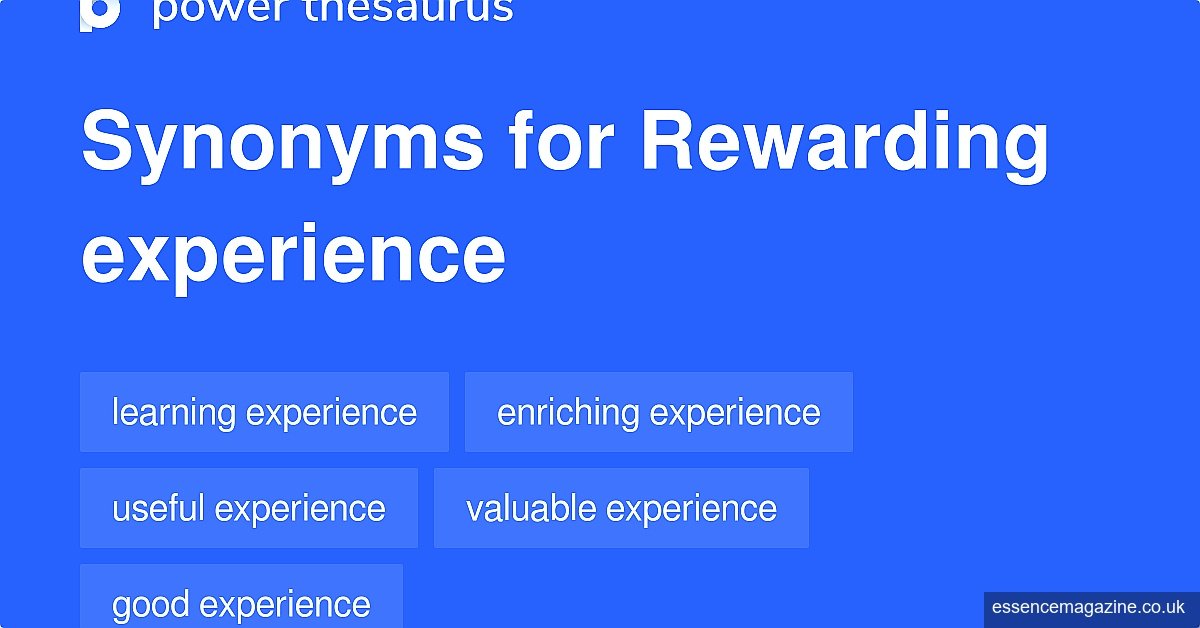
“Enriching” highlights the additive value an experience brings to knowledge, skills, or life quality. It suggests growth and enhancement, making it a strong rewarding synonym for educational or developmental topics.
Use it in statements like, “Traveling abroad proved to be an enriching experience.” This frames the activity as a source of personal expansion, resonating with audiences seeking self‑improvement.
Choosing the Right Synonym for Different Contexts
Professional Settings
In corporate communications, precision matters. “Beneficial” and “advantageous” often replace “rewarding” when discussing ROI, employee incentives, or strategic outcomes. These terms align with business jargon while preserving the positive connotation.
For instance, “The training program was highly beneficial for staff development.” This phrasing speaks directly to measurable impact, satisfying both readers and search algorithms that favor industry‑specific language.
Personal Growth and Wellness
When writing about self‑help or mental health, “fulfilling” and “enriching” become the go‑to rewarding synonyms. They echo the journey toward inner peace and personal achievement, resonating with audiences seeking inspiration.
Example: “Practicing mindfulness daily can be an incredibly fulfilling habit.” The word choice underscores lasting well‑being, encouraging readers to explore deeper content on the topic.
Creative Writing and Storytelling
Authors often favor “gratifying” or “pleasing” to convey character emotions in narrative arcs. These rewarding synonyms add texture to dialogue and description, making scenes more vivid.
Consider, “The hero found the hidden treasure, a gratifying moment after a long quest.” The word paints an immediate sense of triumph, enhancing the reader’s emotional connection.
Academic and Technical Writing
In scholarly articles, “fruitful” and “productive” serve as rewarding synonyms that convey research outcomes. They suggest that the study yielded valuable data or insights without sounding overly emotive.
Example: “The experiment produced fruitful results that advanced the field.” This language maintains academic tone while highlighting positive findings.
Antonyms: Understanding the Opposite Spectrum
Recognizing antonyms sharpens your ability to choose the perfect rewarding synonym. Words like “discouraging,” “demoralizing,” and “unfulfilling” represent the negative side of the satisfaction spectrum.
Using antonyms intentionally can create contrast in persuasive writing. For example, “Unlike the demoralizing feedback from competitors, our service offers a truly rewarding experience.” This juxtaposition emphasizes the positive aspects you wish to highlight.
Moreover, pairing a rewarding synonym with its opposite in a sentence can improve SEO by covering a broader range of search queries. This strategy captures readers who may search for both positive and negative experiences.
Practical Tips for Expanding Your Synonym Toolbox
Start by building a personal thesaurus. Keep a digital note of rewarding synonyms you encounter, and annotate each with context notes. Over time, you’ll develop an intuitive sense of which word fits each scenario.
Read widely across genres—business reports, novels, academic journals—to see how different authors deploy these alternatives. Notice the tone, audience, and purpose behind each choice; this observation refines your own usage.
Practice rewriting sentences using a new rewarding synonym each day. For example, transform “The workshop was rewarding” into “The workshop was enriching,” then assess the nuance shift. This exercise reinforces retention and flexibility.
When you’re ready to apply these words in digital content, remember to sprinkle them naturally. Over‑optimization can trigger search engine penalties, so aim for authentic integration that enhances readability.
Common Pitfalls and How to Avoid Them
One frequent mistake is using a rewarding synonym that doesn’t match the intended intensity. Swapping “fulfilling” for a minor task can sound exaggerated, confusing readers.
Another error is ignoring collocations. Phrases like “gratifying experience” flow smoothly, while “gratifying result” may feel forced. Research common pairings to maintain natural language.
Finally, avoid redundancy by not stacking synonyms in the same paragraph. Using “fulfilling,” “gratifying,” and “satisfying” together can dilute impact. Choose the most precise word and stick with it.
SEO Benefits: Leveraging Rewarding Synonyms in Content Strategy
Search engines value semantic variety. Incorporating multiple rewarding synonyms signals depth, helping your page rank for related queries like “fulfilling career,” “gratifying hobby,” or “enriching activities.” This broadens organic reach without keyword stuffing.
Use synonyms in headings, meta tags, and image alt text where appropriate. For instance, an H2 titled “How to Find a Fulfilling Hobby” captures a different search intent than “How to Find a Rewarding Hobby.” Both drive traffic to the same article.
When crafting internal links, anchor text should reflect the synonym you’re targeting. This reinforces relevance across your site’s architecture, boosting overall SEO health.
Remember to monitor performance with analytics tools. If a particular rewarding synonym drives higher click‑through rates, prioritize it in future content updates.
Explore more strategies for effective content creation your natural anchor text and keep your writing fresh.
Conclusion: Mastering the Art of the Rewarding Synonym
Choosing the right rewarding synonym transforms ordinary prose into compelling storytelling. By understanding nuances, context, and SEO implications, you can craft content that resonates with readers and ranks well in search results.
Remember to balance variety with precision, avoid overuse, and continually expand your lexical repertoire. With practice, selecting the perfect synonym becomes second nature, enriching both your writing and your audience’s experience.
Embrace the power of language, and let each rewarding synonym you employ open new doors to engagement, authority, and digital success.
