
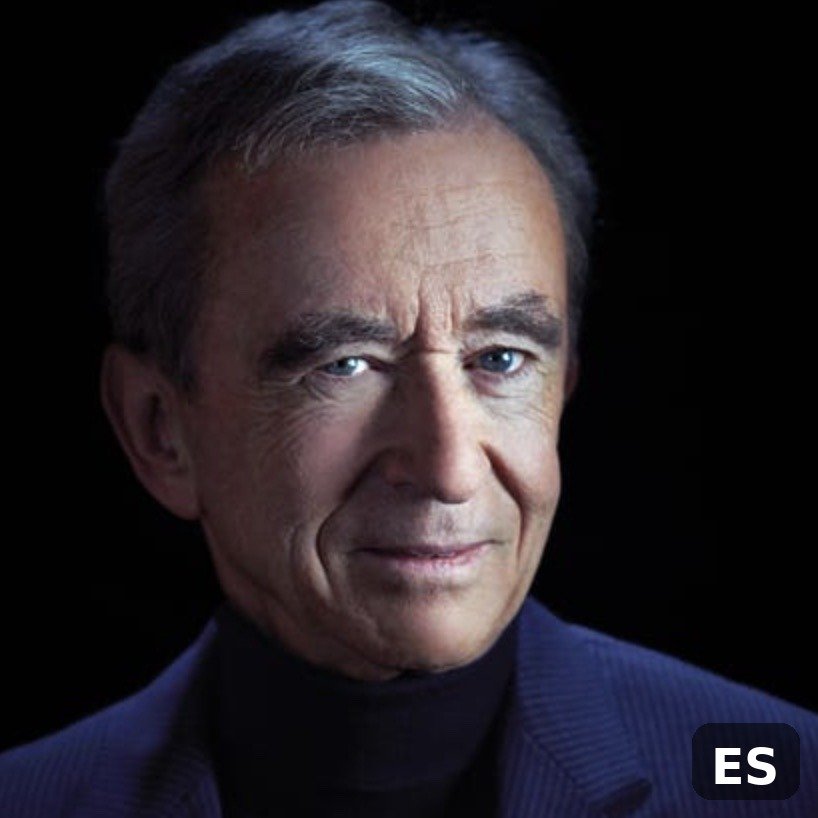
Search for Bernard Arnault and Oliver Zipse together, and one question rises above all the others: what actually connects them? One is the French billionaire who turned luxury handbags and champagne into one of the largest corporate fortunes on earth. The other is the German engineer who spent 35 years inside BMW and rose from a development trainee to chairman of one of the world’s great carmakers.
There is no hidden partnership between them, no joint venture, and no documented personal relationship. But that does not make the comparison empty. These two men represent the two purest routes to the top of European business: ownership and management. Arnault bought his way to power and never let go. Zipse earned his way up through a single company, from factory floor to boardroom, over three and a half decades.
This is their career story side by side — the milestones, the defining deals and decisions, and what the contrast between them says about how influence really works at the very top of global business.
| Quick Bio | Bernard Arnault |
|---|---|
| Full Name | Bernard Jean Étienne Arnault |
| Known For | Chairman and CEO of LVMH, the world’s largest luxury group |
| Date of Birth | March 5, 1949 |
| Age | 77 (as of October 2026) |
| Birthplace | Roubaix, France |
| Nationality | French |
| Education | École Polytechnique (engineering, 1971) |
| Profession | Businessman, investor |
| Children | Five: Delphine, Antoine, Alexandre, Frédéric and Jean |
| Net Worth | Roughly $130–145 billion in recent 2026 estimates |
| Current Status | Chairman and CEO of LVMH |
| Quick Bio | Oliver Zipse |
|---|---|
| Full Name | Oliver Zipse |
| Known For | Chairman of BMW’s Board of Management, 2019–2026 |
| Date of Birth | February 1964 |
| Age | 62 (as of October 2026) |
| Birthplace | Heidelberg, Germany |
| Nationality | German |
| Education | Computer science and mathematics, University of Utah; mechanical engineering, TU Darmstadt; Executive MBA, WHU and Kellogg |
| Profession | Engineer, automotive executive |
| Career Span at BMW | 1991–2026 (35 years) |
| Net Worth | Not publicly disclosed |
| Current Status | Left the BMW Board of Management in May 2026 |
Who Is Bernard Arnault?
Bernard Arnault is the chairman and chief executive officer of LVMH Moët Hennessy Louis Vuitton, the luxury conglomerate that owns more than 75 of the world’s most famous brands, including Louis Vuitton, Christian Dior, Tiffany & Co., Bulgari, Moët & Chandon, Hennessy and Sephora. His family controls roughly half of the group’s capital and a decisive majority of its voting rights, making him one of the most powerful owner-managers in global business.
What sets Arnault apart is how he got there. Unlike most luxury executives, he did not spend his life working inside fashion houses. He entered the sector as an investor and company builder, and his career is essentially a 40-year record of buying, restructuring and compounding prestige brands.
Arnault was born into an industrial family in Roubaix, in northern France, and trained as an engineer at the École Polytechnique, graduating in 1971. He began his working life at the family construction business, Ferret-Savinel, and rose to become its chairman in 1978. That early grounding in running an operating company — not just investing in one — shaped the hands-on way he would later run LVMH.
Bernard Arnault’s Career Milestones
The turning point came in 1984, when Arnault took control of Financière Agache and with it the struggling Boussac textile group, whose most valuable jewel was Christian Dior. He saw what others missed: a great luxury name with international recognition could be rebuilt, and a rebuilt Dior could anchor a much larger luxury strategy.
His next move was bolder still. LVMH had been created in 1987 by the merger of Louis Vuitton and Moët Hennessy, and its founding families were soon at war with each other. Arnault maneuvered through the shareholder conflict and in 1989 became the group’s majority shareholder, chairman and chief executive — positions he has held continuously ever since.
From that base he built an acquisition machine. Over three decades, LVMH absorbed jeweller Bulgari, watchmaker TAG Heuer’s parent structures, luggage-maker Rimowa, hotel group Belmond, and in 2021 completed the roughly $16 billion takeover of Tiffany & Co., the largest deal in the group’s history. Arnault has said his medium-term ambition is to make Tiffany the world’s leading jewellery brand, and the group has poured investment into its stores, marketing and high jewellery lines.
The family control structure is part of the achievement. In 2022, Arnault reorganised the family holding, Agache, so that it is equally owned by his five children — Delphine, Antoine, Alexandre, Frédéric and Jean — all of whom now hold senior roles across the group. In September 2026, the family announced a further reorganisation, concentrating control in a single listed vehicle and launching a cash offer for the 2.44 percent of Christian Dior it does not already own, with Christian Dior shares jumping nearly 17 percent on the news. After the restructuring, the family holds 50.01 percent of LVMH’s capital and 65.94 percent of its voting rights.
Arnault’s fortune has swung dramatically with the luxury cycle. In December 2022 he briefly became the world’s richest person; in September 2026, after a luxury slowdown and geopolitical shocks, Bloomberg put him at about $143 billion — down some $65 billion since the start of the year and, for the first time since 2017, outside the world’s top ten. Even so, he remains one of a tiny handful of people whose wealth was built on things you can touch: leather, diamonds, champagne and perfume.
Who Is Oliver Zipse?
Oliver Zipse is a German engineer and executive who led the BMW Group as chairman of its Board of Management from August 2019 until May 2026, closing a 35-year career at the company. Where Arnault conquered luxury from the outside, Zipse conquered the automotive industry from the inside — he joined BMW in 1991 as a trainee and worked his way up through development, production and corporate strategy.
Born in Heidelberg in February 1964, Zipse studied computer science and mathematics at the University of Utah before earning a mechanical engineering degree at the Technical University of Darmstadt. He later completed an Executive MBA through WHU Koblenz and the Kellogg School of Management. The technical education is not a footnote: Zipse was a production man to his core, and that defined his leadership style.
His early BMW years took him through development and production roles in Germany and South Africa, giving him experience across the group’s international manufacturing network. In 2007 he was made managing director of BMW’s MINI plant in Oxford, then moved into senior planning and strategy functions before joining the Board of Management in May 2015 with responsibility for production.
Oliver Zipse’s Career Milestones
Zipse became chairman in August 2019, and his tenure was immediately tested. Within months he was steering BMW through the COVID-19 pandemic, then the semiconductor shortage, then the supply-chain shocks of the early 2020s. BMW navigated those crises more smoothly than several rivals, keeping factories flexible and protecting profitability while others stumbled.
His defining strategic choice was what BMW calls “technology openness.” While competitors rushed to declare electric-only deadlines, Zipse insisted the company would keep developing battery-electric cars, plug-in hybrids, efficient combustion engines and, in the longer term, hydrogen. The stance drew criticism from EV purists — but BMW kept selling cars in every major market while the transition unfolded.
The capstone of his chairmanship was the Neue Klasse, the new generation of electric and software-defined vehicles that BMW describes as the largest strategic project in its history. The Supervisory Board explicitly credited Zipse with representing that project when it announced his planned departure. His contract had already been extended in 2023 beyond the usual retirement age, and he left the board as planned after the annual general meeting on May 13, 2026 — concluding 35 years with the company.
He was succeeded the following day, May 14, 2026, by Milan Nedeljković, BMW’s production chief since 2019 and himself a BMW trainee since 1993. The handover completed one of the smoothest leadership transitions in the German auto industry, and Zipse’s name is now linked above all to the Neue Klasse on which BMW is betting its future.
Two Routes to the Top: Owner vs Professional Executive
The sharpest difference between Arnault and Zipse is where their authority came from. Arnault’s power rests on ownership: the family holding’s majority voting stake means he answers, in the end, to himself and his children. That structure lets him think in decades, buy brands at cycle lows, and weather years when the market hates luxury stocks.
Zipse’s power came from appointment. He owned no meaningful stake in BMW; his authority flowed from 35 years of demonstrated competence and the Supervisory Board’s confidence. He could shape strategy and allocate billions in capital, but always within a formal German corporate governance system — and when his time came, he left on schedule.
The two industries also demanded different gifts. LVMH lives on desirability: brand heat, creative directors, controlled distribution, and the management of customer desire across decades. BMW lives on industrial execution: engineering tolerances, factory utilisation, battery supply chains and software deadlines. Arnault is a connoisseur of intangible value; Zipse is a master of industrial discipline.
Track Record in Numbers
Arnault’s record is measured in deals and decades. He took control of LVMH in 1989 and has led it for 37 years — one of the longest tenures of any chief executive of a major listed company anywhere. Under his leadership the group grew from a merger of two companies into a house of more than 75 brands, with the $16 billion Tiffany acquisition as the biggest single bet. The family’s 50.01 percent capital stake and 65.94 percent voting control make LVMH one of the most family-dominated giants in the corporate world.
Zipse’s record is measured in factories and product generations. He joined BMW as a trainee in 1991, ran the MINI plant in Oxford by 2007, joined the board in 2015 and chaired the company for seven years. He guided it through a pandemic, a chip crisis and the industry’s most difficult technological transition in a century, and handed over a company launching its biggest-ever product generation. Thirty-five years, one employer, one industry — the classic German Karriere in its purest form.
For more profiles of the figures shaping global business, see Essence Magazine.
Why Are They Searched Together?
The honest answer: there is no documented personal relationship between Bernard Arnault and Oliver Zipse, no record of them working at the same company, and no direct LVMH–BMW corporate alliance that ties the two men together. LVMH and BMW operate in entirely different sectors — luxury goods and premium vehicles — though both sell to affluent customers and occasionally overlap in areas like design, events and luxury marketing.
People search the two names together because they are a natural study in contrasts: Europe’s great owner-entrepreneur against Europe’s great professional manager, luxury against automotive, Paris against Munich. It is a comparison, not a connection — and as a comparison, it is an illuminating one.
Bottom Line
Arnault and Zipse built their careers in opposite directions and arrived at the same altitude: the absolute top of European industry. One bought control and compounded it for nearly four decades; the other earned authority one promotion at a time over 35 years. Their stories are a reminder that there is no single formula for reaching the summit — only different kinds of patience, discipline and nerve.
Frequently Asked Questions
Are Bernard Arnault and Oliver Zipse related?
No. There is no reliable public evidence that they are related. Arnault was born in Roubaix, France, into an industrial family; Zipse was born in Heidelberg, Germany. Their family and professional histories are entirely separate.
Did Bernard Arnault and Oliver Zipse ever work together?
No documented evidence shows the two men worked together directly. Arnault’s career has centred on LVMH and family investments; Zipse’s executive career was spent entirely at BMW from 1991 to 2026.
Is there a business deal between LVMH and BMW?
There is no major direct LVMH–BMW corporate alliance. The two groups operate in different sectors — luxury goods and automotive — though both target premium consumers.
What is Bernard Arnault’s net worth?
Recent 2026 estimates put it at roughly $130–145 billion, with Bloomberg reporting about $143 billion in September 2026 and Forbes’ real-time figure near $129 billion the same month. The exact number moves daily with LVMH’s share price.
Why did Oliver Zipse leave BMW?
His departure was planned: in 2023 his contract was extended beyond the usual retirement age until 2026, and he left the Board of Management after the annual general meeting on May 13, 2026, ending a 35-year career at BMW.
Who replaced Oliver Zipse as BMW chairman?
Milan Nedeljković, BMW’s production chief since 2019, assumed the chairmanship of the Board of Management on May 14, 2026.
